Showing posts with label kinderen. Show all posts

Sunday, 29 January 2012

Ken jij een Verborgen Immigrant?

"Ze zijn er wel maar je ziet ze niet. Ze lopen rond maar je hoort ze niet. Mogelijk vallen ze ook niet op, maar misschien toch wel een beetje? Ze doen niet mee met de laatste mode. Bepaalde spereekwoorden kennen ze niet. Hun taal is anders, wat voor accent is het toch? Ik kan het niet thuisbrengen."

Ja, zo was ik ook toen ik vanuit Afrika in Nederland kwam studeren. Ik was er wel maar viel niet erg op. Ik deed niet mee met de laatste mode. Op mijn middelbare school in Zimbabwe moest ik dagelijks een schooluniform dragen. Trouwens ik heb vanaf dat ik naar de eerste klas van de lagere school tot dat ik naar de universiteit ging altijd een schooluniform gedragen. Wat weet ik nou van de nieuwste mode in Nederland? Mijn accent? Het is een Engels accent in mijn Nederlands. Na de vele jaren Engelstalig onderwijs heb ik er een zachte "t" aan overgehouden. Het schijnt dat ik het woord "thee" toch anders uitspreek dan de meeste Nederlanders. Een verborgen immigrant noemen ze het ook wel. Kinderen die een deel van hun leven in het buitenland hebben gewoond en dan terugkeren naar hun "paspoort" land. Nederland is mijn paspoort land, mijn ouders zijn Nederlanders. Hier kan je meer lezen over mij.

Third culture kids zijn kinderen die in een ander land opgroeien dan hun "paspoort" land. Vroeger was het zo dat het vaak was vanwege het beroep van één van hun ouders. Meestal was het de vader die een diplomaat, zakenman, zendingswerker of ontwikkelingswerker was.

Vooral het terugkeren naar Nederland kan een flinke uitdaging zijn. Dat was het in ieder geval voor mij. Eigenlijk was het voor mij ook niet echt terugkeren, want ik had nauwelijks in Nederland gewoond. Wij kwamen wel regelmatig op verlof maar dat is toch heel anders dan hier wonen. Verlof betekende altijd dat wij weer weggingen, wij zouden weer afscheidnemen van Nederland en van onze familie hier. Op mijn 19de kwam ik alleen naar Nederland om hier te studeren. Ik was een verborgen immigrant, ik zag er net zo uit als mijn medestudenten maar ik voelde mij totaal anders, ik dacht anders, mijn reverentie kader was anders. Ik kwam er toen achter dat ik heel erg beïnvloed was door de landen waar ik in Afrika gewoond had.

Er is onderzoek naar gedaan in Amerika: "Third Culture Students, an exporatory study of the transition in the first year of college" door Dorothy S. Wiegel, University South Carolina 2010.

Deze 3 dingen hielpen studenten om een goeie start te maken op de universiteit:
  1. De mogelijkheid om contact te hebben met docenten
  2. De mogelijkheid om vriendschappen te sluiten met internationale studenten
  3. Een ouder of een familielid hebben in hetzelfde land
Wat ook van belang bleek dat het fijn voor de studenten is om hun eigen verhaal ergens kwijt te kunnen.

Mijn advies is zoek iemand die naar je verhaal wil luisteren. Schrijf anders een dagboek of begin een blog. Lees ook mijn 5 tips voor jongeren die vanuit het buitenland in hun thuisland gaan studeren. Wil je meer over dit onderwerp lezen dan lees het boek "A Global Nomad's Guide to University Transition" geschreven door Tina Quick. Het is ook mogelijk om lid te worden van TCKid.com an online community voor third culture kids daar zal je meer mensen ontmoeten met een soortgelijk verhaal.

Meer lezen?
Herken je het verhaal? Was jij ook een verborgen immigrant? Heb je nog adviezen?
Foto met dank aan Doberman van Morgue file.

Tuesday, 13 December 2011

Meet Sammy the snail, a third culture kid!


Here are some of Sammy's tips if you are moving overseas:

  1.  Keep family traditions alive (like celebrating Sinterklaas?)
  2. Bring soms familiar items from your home and put them in your new home.
  3. Create a special album or a box with memories and add new things as you go along. Then when you look at it you can remember all the great times.
  4. Stay in touch with old friends. Email is a good idea or you can also send a parcel.

Sammy hopes you have a great move! 


Do you want to know more about Sammy? In an earlier post called Global Nomads on the move part 2 I wrote about Helen Maffini's book called Sammy's Next Move. Helen was a third culture kid and she has lived and worked in 11 countries. Helen is a Canadian/British educational consultant who is currently living in Australia. 

Want to read more?

Global Nomads on the move it includes the short film MOVE, worth watching.
Libby Stephens explains what third culture kids are.
Children of the World: where are your roots?
Aga Magdolen's film "Les Passagers"
New book "Emotional Resilience and the expat child"by Julia Simens 

Do you have tips when moving with children? If you were a third culture kid, do you have memories of your moves? Any advice?

Thursday, 8 December 2011

Wat missen Nederlanders in het Buitenland?

Er is pas De Grote Mis Verkiezing gehouden. Wat mis je het meest in het buitenland. Nederlanders en Vlamingen over de hele wereld konden stemmen. De televisie zender BVN hield deze Mis verkiezing. BNV staat voor het Beste van Vlaanderen en Nederland en is de publieke televisiezender voor Nederlandstaligen in het buitenland. Er waren meer dan 10 duizend reacties. Sommige missen een huis vol bloemen of gewoon naar de markt gaan om tulpen te kopen.

Foto genomen in Keukenhof Lisse

Op de website De Grote Mis Verkiezing konden mensen aangeven wat zij het meeste missen in het buitenland.  

Hier is de top 10:
  1. Haring 9,1%
  2. Kroket 8,6%
  3. Kaas 8,1% Zijn wij dan toch echte "Kaas Koppen"?
  4. Hema 8% dan zing ik meteen "Echte Hema!"
  5. Familie/vrienden 6,7%
  6. Fietsen 6,5% Nederkand is ook een echt fietsland. 13,5 miljoen Nederlanders (84%) heeft één of meerdere fietsen. Lees hier Fietsen in cijfers van de Fietsersbond.
  7. Bakker producten 3,7%
  8. Gezelligheid 2,2% (dit is een Nederlands woord dat niet goed in het Engels te vertalen is)
  9. Sinterklaas 2,1% ik heb laatst ook geschreven over Sinterklaas in het buitenland vieren?
  10. Beleg/slaatjes 2,1%
Hier is een kort filmpje van het jeugdjournaal er over dat heet Kroket meer gemist dan oma.
De Belgen in het buitenland missen friet het meest (16,9%)! Er zijn een aantal overeenkomsten met de Nederlanders. Wat Belgen ook missen zijn garnalen, bier, chocola, humor en de markten. Familie en vrienden komen pas op de 8ste plaats.

Tijdens mijn kinderjaren heb ik in Afrika gewoond. Ik kan vooral herinneren dat hagelslag en drop voor ons heel speciaal waren en dat bezoekers uit Nederland dit voor ons meenamen. Er was een periode dat er geen rozijnen of krenten te koop waren in Zimbabwe en ik weet nog dat mensen dit voor ons in hun koffers bij zich hadden. Het kan ook zijn dat wij zelf krenten en rozijnen uit Nederland meebrachten. Ze werden beward voor oudjaarsavond en moesten natuurlijk in de oliebollen mix. Ik weet ook nog dat mijn oma een keer bij ons op bezoek kwam in Malawi en dat zij samen met mijn moeder witte kool omtoverde tot "zuurkool"! Ja stamppotten zijn volgens mij ook typisch Hollands.

Ik heb eerder geschreven over Herinnering aan Holland.
Waar kom je vandaan?
Vliegende Hollanders
Kinderboek "Ik Heb het Niet Bedacht"
Ontdekken dat je een Third Culture Kid bent

Wat mis jij in het buitenland? Waar heb je alles voor over om het het te eten of te kunnen doen? Herken je deze top 10?

Sunday, 23 October 2011

Ontdekken dat je een "Third Culture Kid" bent.

Tegenwoordig zijn er steeds meer kinderen die opgroeien in andere culturen. Op mijn werk is er pas een collega vertrokken naar Australië met 3 kinderen. Een vriendin uit mijn studie tijd woont en werkt in Mexico met haar man en 3 kinderen. Andere bekenden zijn dit jaar vertrokken naar Peru met 4 kinderen. Het reizen gaat steeds makkelijker en door de mogelijkheden van internet lijken de internationale grenzen steeds meer te vervagen. Zelf ben ik geboren in Zambia en heb ik als kind in Malawi en Zimbabwe gewoond. Ik heb eerder al een blog geschreven: Waar kom je vandaan? Het gaat over mijn begin tijd hier in Nederland.

Doordat wij steeds meer en makkelijker internationaal verhuizen ben ik van mening dat het aantal kinderen dat buiten zijn of haar eigen paspoort land opgroeit alleen maar zal toenemen. Deze groep kinderen hebben de naam third culture kids gekregen. Ze hebben een deel van hun ontwikkelingsjaren doorgebracht in een andere cultuur (dus meestal in één of meer landen). Ik heb nog geen goede Nederlandse vertaling voor het woord third culture kids gevonden. Ze worden wel eens derde-cultuur-kinderen genoemd maar persoonlijk vind ik dat geen mooie term.

Laatst kwam ik een artikel tegen over de fases die je doormaakt bij het ontdekken dat je een third culture kid bent. Het spraak mij wel aan en ik zal het hier kort toelichten. Ik heb deze fases zelf ook doorgemaakt maar op dat moment had ik het zelf natuurlijk helemaal niet door. Meestal is het moment dat je ontdekt dat je een third culture kid bent ergens in je tienertijd of iets daarna.

1. De fase voordat je iets over third culture kids weet, onwetendheid

Ik heb veel fijne herinneringen aan deze tijd: kamperen in Zimbabwe, vuurtjes stoken tijdens het kamperen, mount Mulanje beklimmen in Malawi, zwemmen in het meer van Malawi, veel verschillende kinderen in mijn klas op de internationale school. Wij moesten wel regelmatig verhuizen en afscheid nemen maar dat deden de andere "expats" om ons heen ook. Het was dus normaal in mijn beleving. "Anders zijn" was ook normaal.
  
2. De ontdekking dat je een third culture kid bent

Dit gebeurde bij mij toen ik het boek "Growing up Among Worlds" van David Pollock en Ruth van Reken aan 't lezen was. Het was zo'n aha moment. Opeens begreep ik mijzelf beter. Opeens lag het niet aan mij, maar hadden de gevoelens die ik had, de eenzaamheid, het onzekerheid ook te maken met mijn verleden. Het had te maken met het opgroeien in andere culturen/landen. Ik kwam er achter dat ik niet de enige was die deze gevoelens had. Er waren meer third culture kids! Het was een gevoel van opluchting.
Ik werd mij ook meer bewust van de nadelen van het opgroeien in het buitenland.

3. Aanpassen aan je nieuwe identiteit

Ik werd mij meer bewust van de voordelen van het opgroeien in andere landen. Zie ook mijn eerder bericht over de 10 voordelen van het opgroeien in het buitenland. Ik ben gaan nadenken over hoe ik mijn culturele gevoeligheid meer zou kunnen gebruiken in mijn toekomst.

4. Het integreren van het "third culture kid" zijn in jezelf en verder gaan.

In deze fase ben je minder bezig met "het anders zijn", met je identiteit als third culture kid en nu begrijp je dat deze term ook niet alles verklaard. Het is de fase van accepteren en verder gaan. Zelf keuzes maken, vrede sluiten met je verleden en je heden. Niet zo naar de verschillen kijken maar naar de overeenkomsten tussen mensen.

Hey it's Johnny C heeft in het Engels over deze 4 fases van ontdekking geschreven.

Kijk hier naar een kort filmpje "Les Passagers" het gaat over third culture kids (TCKs).
Hier legt Libby Stephens in een korte video uit wat third culture kids precies zijn. Zij heeft al meer dan 25 jaar ervaring met het werken met TCKs.

Ik ben erg benieuwd of jullie deze fases herkennen? Hoe was het voor jou? Zou je hier op willen reageren? Heb je advies voor anderen?

Thursday, 20 October 2011

Have you heard of the magazine: Among Worlds? Especially for Adult Third Culture kids (ATCK).

I recently took an international subscription to the magazine "Among Worlds". It's a magazine to encourage and empower adult third culture kids. In June 2011 the magazine celebrated its' 10th anniversary. The magazine is a quarterly magazine is published by Interaction International.

The September 2011 issue is all about "Social Networking". I will mention a few articles so you have an impression. There's an article written by Morgan McDermott about "Far-away Family & Friends Stay Close on Skype". She's a TCK who has lived in Holland, India, Saudi Arabia, Singapore and the United Kingdom. Of all the social media options she uses skype the most. She even talks to her grandfather on skype! She uses skype to play "checkers" with her grandmother.

There are articles about facebook and TCKs, an interview with TCK Jamie Farr on TCKs and the social network revolution. In the interview there is something about the possible exhaustion that can be a result of a TCK trying to communicate with so many people from the past. While I am writing this I realize that this could be an nice topic for a future post, who knows?

There is a book review about the book "Memories of the Sun". The book is written by Jane Kurtz, it contains a wonderful selection of stories concerning her beloved Africa. Sounds interesting to me (seeing as I have some "African" roots). I must admit I have not read this book...yet. Jane was a TCK too.

I like this quote that I found in the Among Worlds Magazine:

"Friendship is born at that moment when one person says to another, What?! You Too? I thought I was the only one."  C.S.Lewis

Here's another quote from the magazine:

"I am not the same, having seen the moon shine on the other side of the world"
Mary Anne Radmacher Hershey

Musings of a third culture kid has written a review on this magazine, even thought it 3 years old it's still interesting to read. Review of Among Worlds Magazine.

I have only read 2 issues but I enjoyed reading the articles and I do think that the magazine is really worth reading for TCKs and ATCKs. There are helpful articles and articles that make you think.

Do you want to read more? Here are some books I have enjoyed and maybe you would too.

Have you heard of this magazine? If you have has it helped you? In what way?

Wednesday, 21 September 2011

Twitter update week 38: news about kids growing up globally

Sorry to have become a little slack about writing my twitter updates. I posted a comment on an interesting blog Expat with Kids. She wrote a post about third culture kids and she has several posts on this topic. She gave me a compliment for my twitter update which made me feel I must write a new update.

Autumn started today on this side of the globe
This is what I twittered about recently. I hope the links lead you to information you are looking for. By the way autumn started today on this side of the globe.

Are you a third culture kid? Do you agree with the term? Read blog for some thoughts:

Infographic of the modern third culture kid: via interesting! Home? = complicated 

Great article Sharing TCK experience thro' design Nice information package on TCKs international project?

6 Positive strategies to make a teenage repatriation less traumatic:
any advice?

Heard of the ? visit site and click on "news" to read an interview by South China Morning Post 

Culture shock: 24/7 or never again?   

Social media: What parents should know important for TCKs

Post by WifeinaSuitcase English as She is Spoke* Is it "rubbish" or "garbage"?

TCK How to Cope with Change: my top 5 tips
 

Are you global minded? How about your kids? What are you doing about it?

Love the suggestions in this blog post! Responsible global citizenship builds bridges  

5 things to look for in your college hunt, part of our guide for : .

What kind of stressors affect our TCK kids during times of transition?  

Have you heard this? 101 pianos set up in Tilburg - play me, I'm yours!!

Nederlandse kinderen in het in : artikel bij wat vindt jij ervan?

If you would like to read more twitter updates about children growing up in other cultures:
 Please add your news or links. It's all about children growing up in other cultures. Thanks.

Saturday, 17 September 2011

Raising awareness about third culture kids: a brilliant idea.

Recently I stumbled on an interesting article in the Denizen online magazine. It is an interview with Alicia Ingruber (an ATCK) and the titel of the article is Sharing the TCK Experience through Design. I was impressed by the content of the article and even by the title.

Alicia is an adult third culture kid, she was born in Australia, and lived in the Philippines, Canada, Cyprus and New Zealand. I was also excited to discover that she is partly Dutch too! At the age of 22, she discovered she was a third culture kid (TCK). She is a graphic designer and she created an information package for young TCKs moving to New Zealand.

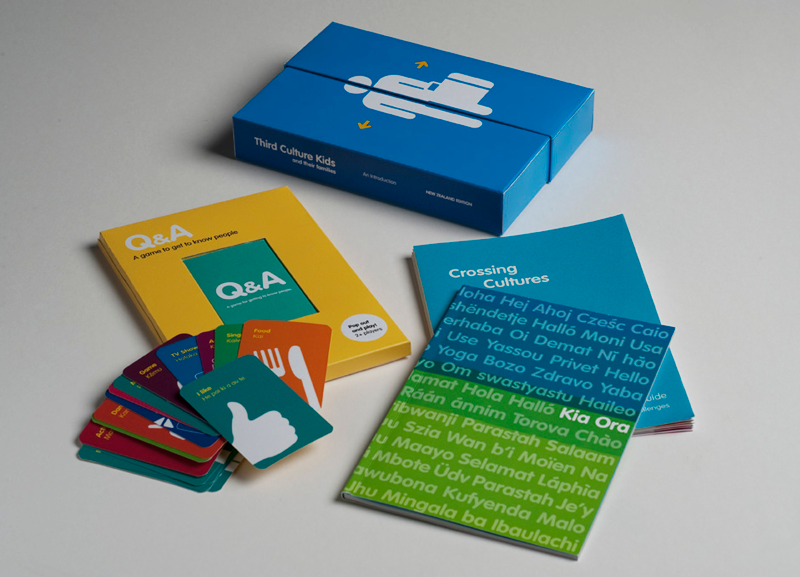
There are 3 parts to the TCK information package:
  1. A children's book for 6 - 10 year olds. It is a story all about moving and going to a new school.
  2. A booklet for parents, with on one side the positive aspects and on the other side the negative aspects of being a third culture kid. It includes tips for parents.
  3. It is a card game: all about creating a sense of belonging. It is a conversation starter.


Alicia "We need to get more awareness out there. Being a TCK is something you should be proud of, and that there are so many people going through the same things you’re going through."  


I am excited about the information package. Is it not possible to make it an international project? A global information package available for parents, teachers, international schools, expats, companies etc? What do you think? Could it be possible? Do you have suggestions? Please let me know. Thanks.

Friday, 16 September 2011

New book: Emotional Resilience and the Expat Child by Julia Simens

Julia Simens has recently written the book Emotional Resilience and the Expat Child practical storytelling techniques that will strengthen the global family.
Julia Simens is an author, educator, consultant and presenter with a focus on international relocation. This has kept Julia coming and going from the USA for over 20 years. She has worked on five continents with families who are relocating all over the world. With a focus on family therapy and early childhood education she has helped many children and families adjust to their global lifestyle. Read more: http://www.jsimens.com/

Doug Ota, child psychologist has forwarded the book. He writes that the book "has broken the skill of understanding feelings into easy digestible and imminently practical steps that any parent can apply. No book has ever done so with the special issues of an expatriate or mobile population in mind."

Definition of the word "Resilience" according to Wikipedia:
"Resilience refers to the idea of an individual's tendency to cope with stress and adversity. This coping may result in the individual “bouncing back” to a previous state of normal functioning, or using the experience of exposure to adversity to produce a “steeling effect” and function better than expected."

The book is essentially written for families with younger children (unto approximately 8 years old) but it contains lots of information on different kinds of emotions (like fear, anger, grief, sadness, and aggression, just to name a few). It would be good for parents, grandparents, teachers and anyone working with third culture kids (global nomads) or expat children to read this book. Let's face it we all want to raise resilient children, don't we?

In the book Julia writes "Reflections about moving" and one sentence just jumps out of the page. It is the sentence:"Children understand and want to talk about what their life has been being an expat child". I think it is so true. Remember I know what she is talking about, I made several international moves as a child. I think this would also be true for children of refugees, immigrants, international adoptees and other kids known as cross cultural kids. So please let's make an effort to talk with these kids moving globally.

Watch this film and experience the book launch in May 2011 at the New International school in Thailand.


Here is a book review of "Emotional Resilience and the Expat Child" written by Wordgeyser (an expat blogger living in the Netherlands). 


Listen to Jo Parfitt interview Julia Simens on the Writers Abroad Radio Show. It's all about why Julia wrote the book.

Julia wrote an article for the website Expat women For Mothers: But just how resilient are you raising your children to be? 


Interested in reading more books on this topic?

Do you have any tips to raise resilient children? Please add your tips.

Friday, 9 September 2011

Third Culture Kids Going to University

Graduation
Have you heard of Denizen Magazine? It is an online magazine dedicated to third culture kids also known as TCKs. There are more than 14 people contributing to this magazine. See the list of contributors here. It is a very multicultural group of people that have lived in many countries of the world. I am enthusiastic about one of their latest articles: A Third Culture kids guide to college. The article is full of links and worth reading if you or someone you know is going off to university or college. Please share it with your friends and family.

I remember the question I came to dread when I started university here in the Netherlands. It was the question: "well where are you from?" Now there someone just asked me one of the most difficult questions there is to answer. In my mind I would think shall I give a short answer or shall I give the whole story? The short answer was "I am from Friesland" (that is up in the north of the Netherlands, where my dad comes from). By the way in Friesland many people speak Frisian. I can actually speak some Frisian too. It has happened that when I gave the short answer and said that I came from Friesland, the reply was "so that explains your accent". Little did they know that the accent in my Dutch was actually an English accent. Now for the long answer I sometimes gave: I was born in Zambia, lived in Malawi, my parents now live in Zimbabwe. My parents are Dutch but I have never really lived here. Usually after the long answer our conversation would end. We had no similarities, my background was so totally different to their story. Occasionally there was the odd question: in what kind of house did you live in? What did you eat there?

Denizen Magazine has another article on 8 do's and don'ts for introducing your TCK background. How can you celebrate your experience abroad without boasting? It's worth reading if you are about to start at a new school or college.
The first tip is interesting:

"Don't give everyone you meet your life story"

So maybe I should have answered with the short answer instead of giving people and overload of information within a few minutes of meeting me?

A book worth reading if you have just started university is "The Global Nomad's Guide to University Transition" written by Tina Quick. She is an adult Third Culture Kid (ATCK) who, having made 18 moves (9 of them before her 10th birthday) understands well the cycle of loss and grief involved in a cross-cultural lifestyle. Tina has raised her own TCKs across four cultures and continents including Asia, Africa, Europe and North America. On the website International Family Transitions Tina gives a list of 10 things every global nomad should know before leaving for university.Check it out.

Recently I wrote 2 blog posts in Dutch. One is about one of my first days at university and the other has 5 tips for students coming from overseas.
Waar kom je vandaan?
5 tips voor jongeren die vanuit het buitenland komen en in hun "thuisland" gaan studeren

Do you have advice for third culture kids going to university or college? Please share it with us. What were your experiences?

Image thanks to hmm360 Morgue file

Monday, 5 September 2011

Twitter update 5 september news about third culture kids

I want to share some good links with you. I twittered about these links the past few days.
Family fun!

10 Lifestyle habits of third culture kids http://bit.ly/nsQKSz written by Brian Royer

You might be a third culture kid: if you speak 2 languages, but can't spell in either...


interview with TCK who is president of a university in Paris: all about
&career

Bilingual babies' vocabulary linked to early brain differentiation: via

@Windmilltales Todays blog post Xpat Blog Hop - Hardest thing to adjust to..
5 tips for future to Holland!

life has another post. Hope you're liking them, community. Post by James R.Mitchner

Anyone got a hankering for sweet potato fries with garlic & Thai basil? lovely blog by and 4 !

'Should our kids go native too?' International vs. local schools, via Expatica. http://bit.ly/qBN36P

Expat Divorce. What about the kids?

J Simens.com New Post - World-wide childhood games teach valuable skills.
Read it now at http://bit.ly/oDfKW9

5 tips for surviving the worst roommate ever written by a graduate TCK

Wereldschool: Boekentip voor expats om kinderen voor te bereiden op vertrek: Anderland boeken. Biedt gespreksstof en handvatten.

Multicultureel opvoeden, ouders willen wel maar weten niet hoe..

Image thanks to Kakisky Morgue File

Friday, 2 September 2011

Third culture kids learning to be themselves

Today it's all about the word "LEARN". You may have seen the 3 short films called MOVE, EAT, and LEARN. Well I am writing a post on each word. The first post was Global nomads on the move en second post was the palettes of the global nomad, all about food. I am writing about these three words because the words capture the life of third culture kids well.

Third culture kids are sometimes called chameleons. Recently Libby Stephens had a transition seminar with 36 third culture kids (TCKs) and the kids were asked to write a list of charateristics of TCKs. One of the words on the list was chameleons. Chameleons adapt well to their environment. They can change colour. The changing of the colour is for social signalling and for purpose of camouflage. Third culture kids, just like chameleons are experts in adapting to their environment. It is something they have had to learn. It is something I had to learn. The Dutch girl with blond hair and blue eyes growing up in Africa. Every time I was placed in a new situation I had to observe, watch and learn:

Chameleon
  • What are the rules here? 
  • What is "normal"? 
  • What do they expect me to do? 
  • What am I not meant to do?
  • How can I pretend not to be different?

The observing, watching and learning was tiring. Adapting again and again and again and again. Usually it happened unconsciously. Trying to mix into the new environment. Even when I came to the Netherlands to study, I looked just like all the other Dutch students but I felt so different. It was so confusing. I felt so lost. How could I learn to be just like them? Would it be possible? Recently I discovered that there is a word that describes me "a hidden immigrant", I look the same but think differently due to my experiences growing up abroad. Something I have been thinking about is: could it be possible to adapt too much to my environment and thus loose a little of myself in the process? I think that could be possible and it is a little scary.

Have you read the poem by Whitni Thomas called "Colors". It is written by a missionary kid (MK). It is about growing up in a Yellow country and having Blue parents. Living in the Blue land there is still something Yellow deep inside and living in the Yellow land the person wants to be Blue. This is the ending:

"Why can't I be both?
A place where I can be me.
A place where I can be green.
I just want to be green." 


I want to learn to be green. To accept and learn just to be myself. To adapt and adjust when necessary but not to lose a part of myself. Growing up in another culture has made me different. What about you? How is your learning process? Have you learned to be green? Have you accepted yourself just as you are? Please share your thoughts with us on this topic.

Here you can watch the short film "Learn". All about learning in other cultures...

Read my post about Cultural identity confusion and third culture kids.

Image thanks to Pablogv2004 Morgue file.

Friday, 26 August 2011

Twitter update week 34: news of children growing up in other cultures

Image thanks to Emk Morgue File
This is what I twittered about this week. I hope the links lead you to information you are looking for.

STUDY: Learning A Second Language Boosts Toddlers' Brain Function


How do you keep your cultural heritage alive?

Are you saying goodbye to family & friends? Expat life is fully of goodbyes


Interesting perspective on the TCK/ATCK/TCA labels. 


New Post Julia Simens - Why TCK's find it hard to go home . . ..  
 

Bullying: when it happens, why it happens, what parents need to know.


You want to read the universal declaration of human rights in over 300 ? You can even hear some

Following on with the homesickness theme today – an interesting article -


"Excuse me sir, you are not who you say you are"


Check out the new blog post - That new school term...


TCK and career Story of how Emily quit job became a great sales person, relates quickly&makes friends

is looking for stories about the best and worst of living abroad. For more information:
. 

Check out our for series of articles 
http://bit.ly/nE5S4x

Whitni Thomas wrote this poem in '91 describes torn loyalties of Third Culture Kids
http://ow.ly/67A3i

How to give your child a multicultural education


Go to a UK university? I'd rather -
http://tgr.ph/nL4AWh

TCK Nicole Boyce shares her experiences living in the UK, Hong Kong and New Zealand


A TCK wrote a post: understanding me: list of characteristics&you know you're a TCK when..

Read what high schooler Charlotte Day has to say about her displaced life:


New Blog: : Comparing conflicting constitutional rights of parents


Reverse Culture Shock - USA Over Consumerism

Feel welcome to add your news or links in the comment section. I heard that there were some problems when adding comments, I have solved these problems. So hopefully it is easier you to add your comments. Thanks.

Friday, 19 August 2011

Twitter update week 33: news on kids growing up in other cultures

These were my twitters in week 33: they are all about children growing up on this globe. Children probably growing up multilingual and often in other cultures. Children who are referred to as third culture kids.

New blog post by Libby Stephens about last week's latest transition seminar with 36 : About the characteristics of third culture kids.

College bound kids: practical stuff for heading overseas
by

10 things every global nomads needs to know before leaving for university


Trying to raise bilingual kids? How to stay on track when English is easiest |
http://bit.ly/rl6uoR

Writers Abroad radio show 13 by Jo Parfitt – Kath Smith of Parents on the Move and Beyond Broken Families http://bit.ly/qxh7qk

New post by JSimens: Parenting: As they get older does it get easier?


Books: A love story (and memories) New post from Musings of a third culture kid


Schiphol: a cleaning car with windmills!
10 Tips for How to Talk to Children About Difficult Issues:

Anyone moving to Kenya? Expat guide to schools there @telegraphExpat 

Kijk naar "blogger in beeld" in het WereldExpat magazine van
 

A new personal post on the phases he went thro' discovering he was a third culture kid


"Flying Solo" is an article about sending your kid 2 college from overseas by Rebecca Grappo. Tis the season again. http://bit.ly/nCpIkO

20 things to teach your child


5 Things you need to know before taking your special needs kid overseas
 

Is your child ready for school? 6 ways to help a child: about early learning. Free download!


Pregnancy around the world: a slide show 16 different countries. New Life!


Multilingual Living Newsletter:


Mobility magazine online: Families moving to Asia? Think of schooling first. especially in Hong Kong   

TCK tries to stay connected with his non-TCK cousins


27 Years of Nomadic Living by


‘British have the most miserable upbringing in the developed world.’
 http://bit.ly/qm2rFl

Looking for more news?
Twitter update week 32
Interesting worldwide third culture kid news

Telling the kids about the international move: make the announcement special. Plan a family meeting. advice from book Raising Global Nomads.
 
An international move is a life-changing event for the entire family, it should be treated with respect its magnitude deserves: Robin Pascoe.

Please add your news or interesting links as a comment. Thanks!

Monday, 15 August 2011

Global nomads on the move

Recently 3 guys traveled to 11 countries in 44 days on 18 flights covering over 38 thousand miles (about 62 000 kilometers) to create 3 short films, ‘Move’, ‘Eat’, ‘Learn’. Thanks Rick Mereki, Tim White, and Andrew Lees for the great short films you made. I will write a post on each word because the words describe the lives of third culture kids (TCKs) or global nomads very well. So today it's all about moving.

I looked up the definition of the word "move" in the free online dictionary. Here follow a few of the definitions: "To go from one residence or location to another; relocate. To cause to go from one place to another. To start off; depart."

Idioms:
move in on
1. To make intrusive advances toward; intrude on.
2. To attempt to seize control of: moving in on their territory.
on the move
1. Busily moving about; active: 
2. Going from one place to another: 
3. Making progress; advancing: 

A study in Denmark found that children who had moved house more than three times were more likely to have been suicidal. "Children may feel ignored and have no one to communicate with. A suicide attempt may, to some extent, express the need for more attention from their parents." So parents please keep talking with your kids before, during and after moving. Many third culture kids (TCKs) or global nomads have moved more than three times. Actually I just discovered that I fall into this at risk category.  Before my 20th birthday I had lived in four different countries: Zambia, Malawi, Zimbabwe, and the Netherlands. Two different continents. In Malawi we lived in Blantyre and Lilongwe. In Zimbabwe I lived in Bulawayo, Mutare and then we moved back to Bulawayo again. Normally I don't add the times we moved within a town, that did not really count for me, but it does count! I am kind of losing count now but I think I moved at least 11 times before my 20th birthday. Heidi Sand-Hart, an adult third culture kid (ATCK) wrote a book Home Keeps Moving. Guess what? It's all about moving.

The American Academy of Child and adolescent Psychiatry writes that children who move frequently are more likely to have problems at school. In the article there are also 7 tips for parents to make the move easier for kids. One that is very important for kids moving around the globe (TCKs) is:

Help children keep in touch with friends from the previous neighborhood/country through telephone, skype, letters, e-mail, and personal visits. 

Julia Simens has written about The top 10 ways to cope with any transition. She is the author of the book Emotional Resilience and the expat child. You can read a book review by Wordgeyser here.

Words I associate with moving are:
  • change
  • chaos
  • stress
  • uncertainty
  • adapting again
  • losing friends
Of course there are positive things about moving but today I want to focus a little on the negative side. After writing all this I must admit that I still enjoyed this film. I hope you do too.


    Third culture kids (TCKs) or ATCKs what are your experiences with moving? What are your thoughts on this topic? Parents of global nomads do you have advice for other families? What are the lessons you have learned? I want you to know that I appreciate your comments.

    Want to read more? Read my post Global Nomads on the move part 2

    Saturday, 23 July 2011

    Terugkeer, re-entry, help!

    Ik wil vandaag iets schrijven over het terugkeren naar het land van je paspoort (je thuisland?) Ik was zelf 19 jaar oud toen ik vanuit Zimbabwe vertrok en in Nederland ging studeren. Eigenlijk kan je niet spreken van een "terugkeer" omdat ik nooit echt in Nederland had gewoond. Ik ben geboren in Zambia en woonde tot mijn 19de in Afrika. Op het moment dat ik ging studeren in Nederland ging ik ook het huis uit. In dit geval was het een grote sprong in het diepe, vanuit Bulawayo naar Leiden. Gelukkig kon ik goed zwemmen anders was ik vast verdronken. Voor mij waren er toen veel veranderingen tegelijk en zodoende vind ik het moeilijk om precies aan te geven wat de symptomen waren van de cultuurschok. In ieder geval was het een erg verwarrende tijd. Voor een korte impressie over mijn begin tijd in Nederland zie mijn bericht Waar kom je vandaan? Het lijkt mij daarom zinvol om iets te schrijven over het terugkeren naar je thuisland.

    Shane Pulmano keerde met haar familie terug naar de Filipijnen na een verblijf van 20 jaar in het buitenland waarvan 12 jaar in Nederland. Zij beschrijft de cultuurschok bij terugkeer zo mooi in Tambuli het enige Nederlandstalige online magazine over de Filipijnen: "Lichaam en geest reageren allebei sterk op de fysieke verhuizing. Ik voel me net een soort tak, gesnoeid van de moederboom, in een potje geplaatst met de opdracht: "Ga maar wortel schieten". Gedachten en gevoelens kun je leren beheersen, maar dit, dit lijkt eerder op een soort innerlijk drang die je niet tegen kunt houden." 

    Maria Foley geeft aan in een artikel dat Third Culture Kids (TCKs), ofwel kinderen die in het buitenland opgegroeid zijn hulp zouden moeten krijgen bij terugkeer naar het land van hun paspoort. Zij heeft ook een artikel over de psychische en lichamelijke klachten die je kunt ervaren bij een cultuurschok. Bij terugkeer kan er sprake zijn van een omgekeerde cultuurschok en dan kun je last hebben van precies dezelfde klachten als bij een gewone cultuurschok. Er kan sprake zijn van moeheid, slapeloosheid, verlies van eetlust of juist toename van eetlust om maar een paar klachten te noemen. Wat betreft de psychische klachten kan er sprake zijn van bijvoorbeeld: verdriet, eenzaamheid, verlies van identiteit, een negatief zelfbeeld of moeite met concentreren.

    Adviezen bij terugkeer:
    1. Deel je erveringen met anderen. Begin een blog, of schrijf artikelen.
    2. Blijf dingen doen die je in het buitenland hebt geleerd, blijf het eten eten wat je daar lekker vond. Lees internationale kranten of websites. Zoek de internationale gemeenschap op in je eigen land.
    3. Vraag om een training. Er bestaan trainingen om je voor te bereiden op de terugkeer naar je eigen land. In Nederland kan een re-entry training bijvoorbeeld bij het Koninklijk Instituut voor de Tropen (KIT) gedaan worden en het kan ook bij In Transit, Crosscultureel Psychologen. Soms heet het ook een debriefing.
    4. Voor jongeren die vanuit het buitenland naar Nederland komen om te studeren lees het boek Global Nomad's Guide to university Transition geschreven door Tina Quick en lees de 5 adviezen van Tina Quick.
    Voor praktische tips bij terugkeer naar Nederland zie mijn eerder bericht en het filmpje van Paul. Voor meer adviezen over terugkeer lees het artikel van RNW Wereldomroep. Tips voor terugkeer in het Engels zijn te vinden op de blog van Expat Explorer. 

    Wat zijn jullie ervaringen? Ik ben ook erg benieuwd hoe het met de kinderen is gegaan na terugkomst. Ik hoor graag van jullie.