Showing posts with label parenting. Show all posts

Monday, 5 December 2011

Top 10 countries for Raising Children abroad in 2011

The Expat Explorer Survey 2011 is a survey in which 3385 expats participated from over a 100 countries of the world. I am most interested in the chapter on raising children abroad. In other words that is the chapter on raising third culture kids. I want to know which country parents think is the best to raise your kids.

The survey looked at 3 main factors on raising kids abroad. These are the 3 factors:
  1. Childcare (safety of children, standard of education, quality of childcare and overall cost of raising children)
  2. Health and wellbeing (spending time outdoors, spending time with parents, playing sports, playing video games, watching TV, children eat less junk food now)
  3. Integration (settled in quicker than parents, enjoyed their lives, are learning new languages, missing home and friends, social integration)
Scores from each factor are weighted to arrive at an overall Raising Children Abroad score and overall rank. The weighting applied is as follows: childcare - 33,3%, Health & wellbeing - 33,3% and Integration 33,3%.

Now here are the top 10 countries for raising children abroad according to this survey:
  1. France
  2. The Netherlands
  3. Australia
  4. Hong Kong
  5. China
  6. Singapore
  7. United Arab Emirates
  8. Mexico
  9. United States
  10. United Kingdom
France provides the best environment for raising children, with the Netherlands second best and Australia in third place. Children in these countries appear to lead a much healthier lifestyle: spending more time outdoors and more time playing sports. Of course I am a little proud that the Netherlands scores so well on raising children. I will share more specific results about the Netherlands in one of my next blog posts.

What are your experiences with raising kids abroad? Do they match the results of this survey? Do you have tips for other parents? Please share it with us. Thanks.

Good reads:
Bilingualism and growing up abroad
My 10 advantages of growing up abroad
Third culture kids: learning their mother tongue
Third culture kids going to university

Photo by KConners, MorgueFile

Thursday, 17 November 2011

Great Third Culture kid information on the Web

Every now and then I post twitter updates but recently I realized that not everyone is on twitter. I wasn't until a couple of months ago. In this post I wrote about my first adventures on twitter. You can follow me on twitter @DrieCulturen. Just today I read that the number of active twitter accounts in the Netherlands increased by 60% in the last 10 months. Well that's all for now about twitter, because I decided to give you links to good third culture kid information on the web. If you are a third culture kid looking for information or a parent raising children internationally do have a look at these sites.
  1. Libby Stephens wrote a great blog post on her favorite third culture kid resources. Libby Stephens is a cross- cultural transition consultant and she has worked with TCKs for more that 25 years. 
  2. Denizen online Magazine it's dedicated to TCKs. Interesting information: like an infographic about third culture kids.
  3. Educating Global Nomads a blog by Rebecca Grappo, a Certified Educational Planner. She is also mother of 3 grown expat children. On her blog you will find information about education, international schools, special needs and more.
  4. Multilingual Living is a place where parents raising children in more than one language and culture can find inspiration, tools, advice, wisdom and support! Worth a visit.
  5. In Culture Parent is a website for parents raising little global citizens. There's lots of different information there.
  6. MummyinProvence Ameena Falchetto is third culture kid and an expat living in France. She has lovely posts on her site about the Global Differences in Baby-making. Nice photos and advice from mothers who have been there before.
  7. Julia Simens she is author of the book "Emotional Resilience and the Expat Child", educator and consultant. She has a blog and here are her "Mustreads".
  8. Raising My TCKs it is an online community with personal stories about parenting third culture kids.
I hope you find what you are looking for. If you know of good sites, please let me know. If you need information about third culture kids but you can not find it, please let me know. Maybe I can help.

Wednesday, 28 September 2011

Bilingualism and Growing up Abroad

I just read Libby Stephens' blog  Bilingualism and Emotional Competency. I would like to encourage parents, educators and third culture kids to read her post. It is really full of information.

Libby writes that language is so often tied to identity. I really agree on this one. Many of you have probably read my story. I was born and bred in Africa. After living there for the first 19 years of my life, I left Zimbabwe and headed off to the Netherlands to study at university. All my years in Africa had not changed the colour of my blond hair and blue eyes. My passport too was Dutch. So even though I had never really lived there many people referred to me as the Dutch girl. Well let me tell you that "the Dutch girl" was so happy that her parents had made the effort to teach her to speak, read and write her own language: Nederlands (or Dutch).

During my time in Africa many hours of my holidays were spent learning Dutch. It was compulsory. My parents always ensured that we spoke Dutch in the home. You must understand that all my schooling was in English. In Malawi I attended international schools. Often it was very tempting to switch to English when I was playing with my siblings, but my parents kept their ears open.

We were encouraged to write letters in Dutch to our grandparents and extended family. My mother ensured a never-ending supply of Dutch children's books. In Harare, the capital of Zimbabwe there was a small library with Dutch children's books and so we would travel 366 km to get new library books. I am telling you this to show you the amount of effort needed to learn a language or to keep the language fluent.

I am so grateful that my parents encouraged us and made such an effort to teach us our family language. How would I have ever been able to communicate with my grandparents, aunts, uncles, cousins etc if I had not been able to speak Dutch? Please parents make wise choices on this language issue. Seek expert advice, don't take the easy road. Remember language has everything to do with identity. Remember there is also a language of the heart.   

Every now and then I meet people who regret that their parents did not teach them to speak their home language. Well I could write another whole post on this subject but maybe I can summarize it in two main words: PAIN and REGRET.

Morgu file Vahiju
Recently I even read that bilingual brains are more healthy.  Canadian neuroscientist Ellen Bialystok finds that people who speak two languages cope significantly better with the disease. Even late-life language learning is beneficial, probably because it is way of keeping the brain active.

Some time ago I wrote a post in Dutch called taal.
I also wrote about the book Make Your Child Multilingual by Silke Rehman.This is my most recent post: Third culture kids learning their mother tongue.

Do you have advice on bilingualism or multilingualism? Do you have tips for parents? Did you grow up bilingually? What's your story? Please share it.

Saturday, 17 September 2011

Raising awareness about third culture kids: a brilliant idea.

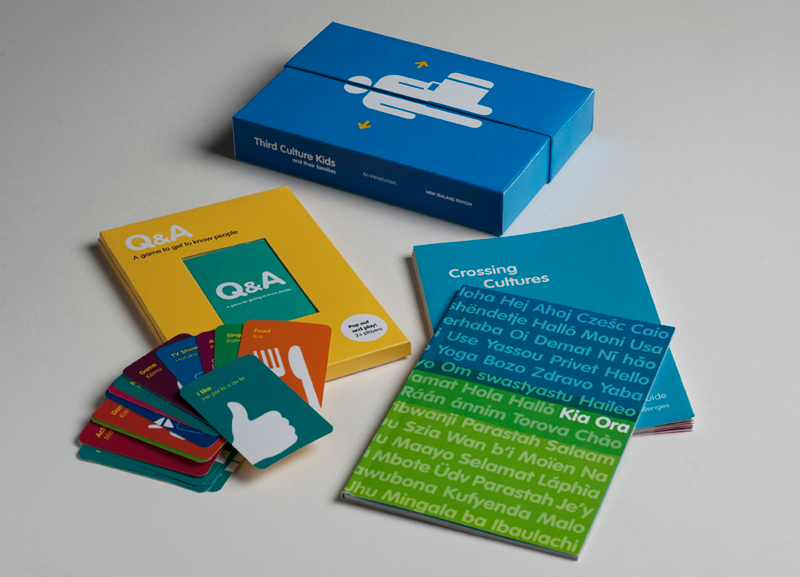
Recently I stumbled on an interesting article in the Denizen online magazine. It is an interview with Alicia Ingruber (an ATCK) and the titel of the article is Sharing the TCK Experience through Design. I was impressed by the content of the article and even by the title.

Alicia is an adult third culture kid, she was born in Australia, and lived in the Philippines, Canada, Cyprus and New Zealand. I was also excited to discover that she is partly Dutch too! At the age of 22, she discovered she was a third culture kid (TCK). She is a graphic designer and she created an information package for young TCKs moving to New Zealand.

There are 3 parts to the TCK information package:
  1. A children's book for 6 - 10 year olds. It is a story all about moving and going to a new school.
  2. A booklet for parents, with on one side the positive aspects and on the other side the negative aspects of being a third culture kid. It includes tips for parents.
  3. It is a card game: all about creating a sense of belonging. It is a conversation starter.


Alicia "We need to get more awareness out there. Being a TCK is something you should be proud of, and that there are so many people going through the same things you’re going through."  


I am excited about the information package. Is it not possible to make it an international project? A global information package available for parents, teachers, international schools, expats, companies etc? What do you think? Could it be possible? Do you have suggestions? Please let me know. Thanks.

Friday, 16 September 2011

New book: Emotional Resilience and the Expat Child by Julia Simens

Julia Simens has recently written the book Emotional Resilience and the Expat Child practical storytelling techniques that will strengthen the global family.
Julia Simens is an author, educator, consultant and presenter with a focus on international relocation. This has kept Julia coming and going from the USA for over 20 years. She has worked on five continents with families who are relocating all over the world. With a focus on family therapy and early childhood education she has helped many children and families adjust to their global lifestyle. Read more: http://www.jsimens.com/

Doug Ota, child psychologist has forwarded the book. He writes that the book "has broken the skill of understanding feelings into easy digestible and imminently practical steps that any parent can apply. No book has ever done so with the special issues of an expatriate or mobile population in mind."

Definition of the word "Resilience" according to Wikipedia:
"Resilience refers to the idea of an individual's tendency to cope with stress and adversity. This coping may result in the individual “bouncing back” to a previous state of normal functioning, or using the experience of exposure to adversity to produce a “steeling effect” and function better than expected."

The book is essentially written for families with younger children (unto approximately 8 years old) but it contains lots of information on different kinds of emotions (like fear, anger, grief, sadness, and aggression, just to name a few). It would be good for parents, grandparents, teachers and anyone working with third culture kids (global nomads) or expat children to read this book. Let's face it we all want to raise resilient children, don't we?

In the book Julia writes "Reflections about moving" and one sentence just jumps out of the page. It is the sentence:"Children understand and want to talk about what their life has been being an expat child". I think it is so true. Remember I know what she is talking about, I made several international moves as a child. I think this would also be true for children of refugees, immigrants, international adoptees and other kids known as cross cultural kids. So please let's make an effort to talk with these kids moving globally.

Watch this film and experience the book launch in May 2011 at the New International school in Thailand.


Here is a book review of "Emotional Resilience and the Expat Child" written by Wordgeyser (an expat blogger living in the Netherlands). 


Listen to Jo Parfitt interview Julia Simens on the Writers Abroad Radio Show. It's all about why Julia wrote the book.

Julia wrote an article for the website Expat women For Mothers: But just how resilient are you raising your children to be? 


Interested in reading more books on this topic?

Do you have any tips to raise resilient children? Please add your tips.

Saturday, 30 July 2011

Modern technology a blessing or a curse for our third culture kids?

This week a colleague of mine had the honour of became granny for the first time in her life. A small grandson was born and she was elated! Of course we all had to hear her good news and see the photographs on her iPhone, but that was not all. She actually had the baby visible on her webcam, we could see him lying in his cot and moving his arms. When he was picked for a feed, the cot was empty. He was in a local hospital here in the Netherlands. I suppose it is rather special but how can you do your work if you can watch your grandson all day? What about the privacy of this newborn? It made me wonder if granny lived in New Zealand would she have been able to watch this baby too? Times a definitely changing. I nearly spelled "definitely" wrong because I spelled it "definately". I just discovered that definitely is the most misspelled word in the English language. Never too old to learn something new! By the way webcam was developed in 1991, but the first commercial webcam came on the market in 1994.

When I was born years ago in the Zambian bush my parents sent a telegram home to the family. My grandparents saw me for the first time on a photograph but that was weeks after I was born. These new possibilities can be a great advantage for families separated from their loved ones by many kilometres. Like the third culture kids (TCKs), children growing in in another culture. I came across a great article Grandparenting over the seas written by Libby Stephens. There is another article too How to bridge the gap: tips for long distance relationships.

Skype has made long distance calls very cheap and with the great possibility of being able to see each other. This is really good for children. When I was in Indonesia and our daughter who was 2 years old at the time was able to skype with me from home base in the Netherlands, it made her feel that I was nearby. When she was going to have her meal she asked "mum are you coming home now to eat too?"

Friends of mine recently moved abroad but on their blog they shared the added pressure the new possibilities create. How often do you skype with grandparents when you are living abroad? Sometimes with the time differences you have to be creative to be able to actually skype together.

In this day and age it is important that we talk to our kids about social media: Facebook, hyves (the Dutch youth),Youtube etc. For third culture kids (TCKs) the internet is a blessing, it makes it so much easier to stay in contact with friends all over the globe, but it can be a curse too. Just read the newspaper and see what kind of things happen using the internet. Listen and watch this: for one minute about social media and your kids. It is a short video from the website Healthy Children powered by pediatricians.

What are your experiences with having family far away? Are you able to bridge the gap? Please share your stories here, do you have advice for other families? Is the modern technology a blessing or a curse?