Showing posts with label resilience. Show all posts

Monday, 25 July 2016

10 tips to help you prepare your child for an international move

Recently I read a post on Facebook. A mother was asking advice on how to prepare her daughter for a n upcoming move from England to the Netherlands. Her daughter is 5 years old and she had said to her mum "Please mum I don't want to leave my home and my school". I am sure her child is not the only one that does not want to move.

The question made me think. What would my advice be? As a child I moved many times in Africa, I
photo by Kelly Morguefiles
wonder how my parents prepared us, there were four of us, I have two brothers and a sister. These days there are so many more resources, we have books, the internet, social media to seek advice. I do think this is a great question because I firmly believe parents can help and prepare their children for an international move.

My 10 tips would be:
  1. Acknowledge your child's emotions. Give her permission to feel sad about the move and about saying goodbye. Give her permission to identify and express her emotions. You can help her by saying "I see that you are sad about leaving your friends". If you want to read more on this topic the Centre on the Social and Emotional Foundations for Early Learning have practical suggestions here in this download Teaching Your Child To: Identify and Express Emotions.
  2. Watch the Disney movie "Inside Out" together. The girl named Riley makes a move too and finds it tough. Watch it together and take time to talk about it. The movie is all about emotions.
  3. Make the move an adventure. When the moving boxes arrive let her paint one or decorate it by using stickers, glue, paint, and pretty pictures. She can even decorate the box with a friend (you then include her friends in the process, so they can get used to the idea that she will move).
  4. As part of the adventure search for information about the city and country you will move to. Show photos or a youtube film. If possible make a preliminary visit to the new country. Be careful not to raise the expectations too high.
  5. Let her help pack the boxes. Let her help you sort out which toys she will take along. Let her put her most important toys in the decorated moving box. By letting her make choices you give her some control in a time that many things are "out of her control". You are giving her some influence in this situation.
  6. Maintain stability. In the crazy time before, during and after the move try to stick to family routines. For a child this means that even though many things are changing there are still constants in her life and that can give a child stability and a sense of security.
  7. Make a countdown calendar together to help vizualize how many nights until the move. Suggestions for a creative and fun countdown calendar can be found here. The concept of time, and knowing when the move will take place can be difficult for children. A countdown calendar can help your child understand how many "sleeps" until the move.
  8. Help your child say her good-byes. David Pollock and Ruth van Reken talk about it in their book "Third Culture Kids, Growing up Among Worlds". They mention the need for saying good-bye to people, places, pets and possessions. Plan a farewell party for her friends, make the invitations together. Visit special places as a family. Ask her what she would like to do one last last time. Eat and ice cream in the favourite ice cream parlour or swim in a certain swimming pool. Make photos of these last visits. If there is a pet will the pet come along or will someone care for the pet? Maybe possessions will be let behind. Help her accept that some possessions will remain behind, maybe you will give some things to other people, involve your daughter in the process. You could give her a small treasure box in which she can put special treasures, it could be a small stone from you garden or something else special.
  9. Consider buying her a copy of the book My Moving Booklet by Valerie Besanceney. The booklet has been designed to help children through the initial stages of an upcoming move.
  10. Make a small photo album specially for her with photos of the friends she will leave behind, of the farewell party, of the special places, of house you lived in and lots more. This photo book can be a tool she can use to show and tell others where she used to live.
If you don't have enough time to make a calendar, make invitations for a farewell party, make the photo album then get other people involved in your move. Your friends probably want to help you, try to delegate something. Ask another mum to help you, she will probably feel privileged!\

There are many more things parents do to help their kids, I would love to hear your suggestions. Please share them here. Thank you so much.

Related Posts:

Sunday, 31 January 2016

Preparing for the Families in Global Transition Conference 2016

At the moment I am preparing for the FIGT conference which will take place in March. It's the first time ever that this conference will take place in the Netherlands. It's the first time it will take place in Europe. It's the first time I will attend the conference and it's the first time I will be presenting at the conference. Very exciting! By the way the conference schedule is available and the presenter biographies. As you can see there are more than 50 presenters, I expect that they will represent all the corners of the world.

While preparing for my session I was searching the internet for new information on third culture kids. I found a nice short video made by teenager Alison. She's a third culture kid herself, she explains what it means, has done some research and she gives advice. It's worth watching.


She conducted a survey and it revealed that the TCKs find leaving friends and changing school the most difficult. It took them a couple a months to adjust to the new surrounding. She encourages TCKs to meet new people and learn the new language. Her last advice is: Stay open-minded and resilient and moving can enhance your life.

By the way I hope you are attending the Families in Global Transition Conference in Amsterdam too. Please let me know if you're coming so we can meet up. 

Related posts: 
My 10 advantages of growing up abroad
Interview with graphic design student Jessica Wen on her third culture kid book project
Interesting interview with researcher and adult third culture kid Rachel Cason 

Sunday, 26 April 2015

Providing children with tools to tell their stories

My inspiration today is an amazing post by Eric Spreng, an international school teacher at the International School of Ouagadougou (the capital of Burkina Faso). I wish there were more international school teachers like him. I wish I had teachers like him when I grew up in Africa.

He teaches to promote student voice, he provides the students with tools they need to articulate themselves and their stories, especially when these stories challenge the dominate narratives that would marginalize them. I think this is what all children need but especiallt third culture kids. They need tools to articulate themselves. They need tools to be able to tell their story in what ever environment or situation they are.

Recently I came across this quote and I believe it is so true.

"All sorrows can be borne if you put them into a story or tell a story about them" these are words by Karen Blixen, the author of the book "Out of Africa".

Third culture kids grow up often moving from country to country with their parents. It can be very exciting and adventerous but the other side of the coin is that they often have to depart and leave friends and familiar places. They often have to say goodbyes. These moments can be painful and sad. If they are equipped with tools to tell their stories it could be great help for them in life. It will make them more resilient and more able to thrive in this global world.

Not only teachers can teach kids the importance of their stories, but we as parents can teach our
Photo by DrieCulturen, taken at Schiphol
children too. Decades of research has shown that most happy families communicate effectively. It means that as a family you tell a positive story about yourselves. If you want a happier family, create, refine and retell the story of your family's positive moments and your ability to bounce back from difficult ones. Read more on this topic in the article The Stories that Bind Us.

So back to Eric Spreng's post. He says: "From the beginning of the year, I make it clear that student voice is one of our great resources, that students' diverse experiences and cultures are assests to us as a community of learners. He gives examples of students that develop their own voice, do read his post called "Why I teach: Voice, Discourse and Empathy."

Related Posts

Sunday, 23 June 2013

Sharing a Secret on Raising Resilient Kids

Recently I did a guest post on Olga's blog The European Mama. The interesting thing we recently discovered is that our blogs are about the same age. Olga is "A Polish mother living in the Netherlands with her German husband and three children and she writes about parenting, multilingualism, being European, and much much more."

I liked the interview on the InCultureParent's website of Olga and her husband, if you want to know more about what a real intercultural family is like then you can read the interview here. 

In my guest blog I write about the secret of raising resilient kids. Don't we all want to raise strong healthy kids? Children that can face challenges and overcome them. Children who grow and develop into healthy independent individuals. Well I recently discovered a secret to raising resilient kids.

What is resilience? Resilience is a powerful word. Psychological resilience is an individual's tendency to cope with stress and adversity. So is there a key to raising kids that can cope well with stress and adversity?
If you want to continue reading click over to Olga's blog.

Remember there is still time to leave a comment on my latest post an interview with Apple Gidley and have a chance to win a signed copy of her book Expat Slice. Apple grew up as a third culture kid and she has kept moving ever since.

Related Posts:

Thursday, 9 May 2013

Is There a Difference Between Adults and Kids Living Abroad?

Someone wrote to me this week that there is no difference between adults and children living abroad in different cultures. I am sorry but I cannot agree with this statement because it just is not true. There are many things that are the same:
  1. Both adults and children can experience a culture shock on transitioning to a new country.
  2. Both can struggle to learn the new language. Usually the kids win this one!
  3. Both need to discover what the rules and customs are in a country. The kids usually adapt quicker than the adults.
Madurodam, in the Netherlands
The difference is that the adults have formed their identity before moving to the new country. The child is still is still in the process of forming his or her identity. So the key word here is: identity. In my latest post I wrote about identity. Culture is linked to identity. Once you do know how a culture works it gives us a sense of belonging, identity and confidence. The problem with third culture kids is that they might think they know the culture and then suddenly they move to a new country and the culture is different. Our family, our community and the place we live in serve as mirrors to us. A child forms their own identity by using these mirrors. When the mirrors change the identity formation is much more of a challenge. This is the crucial difference between adults and children living and moving abroad.

I believe there are things that parents can do to help kids form their identity and to help third culture kids feel less of a victim of their circumstances. In the end no one grows up in perfect conditions. Maybe I will write about this in the future.

10 Things parents can do to help their children form their identity and thrive while growing up abroad:
  1. Regularly return to the passport country, for me that was the Netherlands.
  2. If possible return to the same place for a period of time in the passport country. We usually spent part of our leave on the family farm in Friesland, in the north of the Netherlands. It helps kids bond with that place. Julia Munroe Martin writes about where she spent her summer vacations. "I had no place to call home. The closest I ever felt to home was with my grandmother at her house in Poland, Ohio, on the banks of Yellow Creek."
  3. Tell stories about your heritage. Tell stories about the grandparents. Research shows that children who know more about their family background are more resilient. Here's an article about it in the New York Times.
  4. Teach children their mother tongue. Speak it to them and encourage them to speak it. There is an interesting link between language and identity!
  5. Help the children to be in contact with their family abroad. Here are some great suggestions by Libby Stephens on grandparenting over the seas.
  6. Have your own family traditions. Develop your own way of celebrating birthdays or special days. While I grew up in Africa we celebrated Sinterklaas every year.
  7. Encourage children to have a treasure box, with special small items from the countries they have lived in.
  8. Help children say goodbye well when they leave a country, so that they can start anew in a healthy way.
  9. Help children when they transition back to their passport country. If possible let them have their own debriefing*. The transition back is very challenging.
  10. If children are transitioning back for college or university you can consider getting a mentor to mentor them during the transition period. There is a new mentoring program for expat teens done by Sea Change Mentoring.
Do you have any suggestions how we can help our kids? Do you agree that there is a difference between adults and children living and moving abroad?

* Debriefing is telling our story, complete with experiences and feelings, from our point of view. It is a verbal processing of past events. Debriefing includes both facts and emotional responses, and invites feedback.

Related posts:
Third culture kids self-identity books
Sharing our Roots Interview (on Life with a Double Buggy)
Learning to Grieve well (on Communicating across Boundaries)
The discomfort of re-entry back home (on Sara Taber's blog)

Friday, 16 September 2011

New book: Emotional Resilience and the Expat Child by Julia Simens

Julia Simens has recently written the book Emotional Resilience and the Expat Child practical storytelling techniques that will strengthen the global family.
Julia Simens is an author, educator, consultant and presenter with a focus on international relocation. This has kept Julia coming and going from the USA for over 20 years. She has worked on five continents with families who are relocating all over the world. With a focus on family therapy and early childhood education she has helped many children and families adjust to their global lifestyle. Read more: http://www.jsimens.com/

Doug Ota, child psychologist has forwarded the book. He writes that the book "has broken the skill of understanding feelings into easy digestible and imminently practical steps that any parent can apply. No book has ever done so with the special issues of an expatriate or mobile population in mind."

Definition of the word "Resilience" according to Wikipedia:
"Resilience refers to the idea of an individual's tendency to cope with stress and adversity. This coping may result in the individual “bouncing back” to a previous state of normal functioning, or using the experience of exposure to adversity to produce a “steeling effect” and function better than expected."

The book is essentially written for families with younger children (unto approximately 8 years old) but it contains lots of information on different kinds of emotions (like fear, anger, grief, sadness, and aggression, just to name a few). It would be good for parents, grandparents, teachers and anyone working with third culture kids (global nomads) or expat children to read this book. Let's face it we all want to raise resilient children, don't we?

In the book Julia writes "Reflections about moving" and one sentence just jumps out of the page. It is the sentence:"Children understand and want to talk about what their life has been being an expat child". I think it is so true. Remember I know what she is talking about, I made several international moves as a child. I think this would also be true for children of refugees, immigrants, international adoptees and other kids known as cross cultural kids. So please let's make an effort to talk with these kids moving globally.

Watch this film and experience the book launch in May 2011 at the New International school in Thailand.


Here is a book review of "Emotional Resilience and the Expat Child" written by Wordgeyser (an expat blogger living in the Netherlands). 


Listen to Jo Parfitt interview Julia Simens on the Writers Abroad Radio Show. It's all about why Julia wrote the book.

Julia wrote an article for the website Expat women For Mothers: But just how resilient are you raising your children to be? 


Interested in reading more books on this topic?

Do you have any tips to raise resilient children? Please add your tips.

Wednesday, 3 August 2011

Twitter update week 31: news on third culture kids (TCKs)

Resource for multicultural parents & kids Bringing Up Children Bilingually: http://bit.ly/qTN53e

The story of a Third Culture kid (TCK) feeling foreign when she is not a racial minority "a stranger in my own skin" 

All about Third Culture Kids (TCKs) starting careers  

Jo Parfitt interviewed Helen Maffini, author of  the children's storybook Sammy’s Next Move (written by an adult TCK for TCKs): http://bit.ly/rb6jxC

Building resilience in children&teens: Giving your children Roots and Wings!  

Thandie Newton: Embracing otherness, embracing myself, a Video TED.com 

Have you found your story? Inspiration from the stage to the page hear all about food: the Food Inspirer!

Jonathan Griffiths and Marion Knell discuss re-entry as it affects the entire family. http://bit.ly/pNoH6e

The End of Expatriate Life Leads to Re-Entry Shock

Andrea Expat July Feature: Emotional Resilience & the expat child

Calling all Expats/Repats - here's a fun way to define "where's home?" Families in Global Transition are producing a cookbook  

10 ways to cope with any transition by Julia Simens:  

Je puber veilig laten opgroeien in het buitenland artikel van RNW

Tuesday, 14 June 2011

Kinderen in andere culturen: wat een veerkracht!

Kinderen groeien op, soms in hun eigen cultuur: de cultuur van hun ouders maar soms groeien ze op in een andere cultuur. Dat kan allerlei redenen hebben: kind van een expat zijn, kind van ouders die het avontuur op zoeken of kind zijn van ouders die asiel aangevraagd hebben.

Gelukkig hebben kinderen vaak ontzettend veel veerkracht. In het Engels heet het ook wel resilience. 

"Resilience" in psychology is the positive capacity of people to cope with stress and adversity.

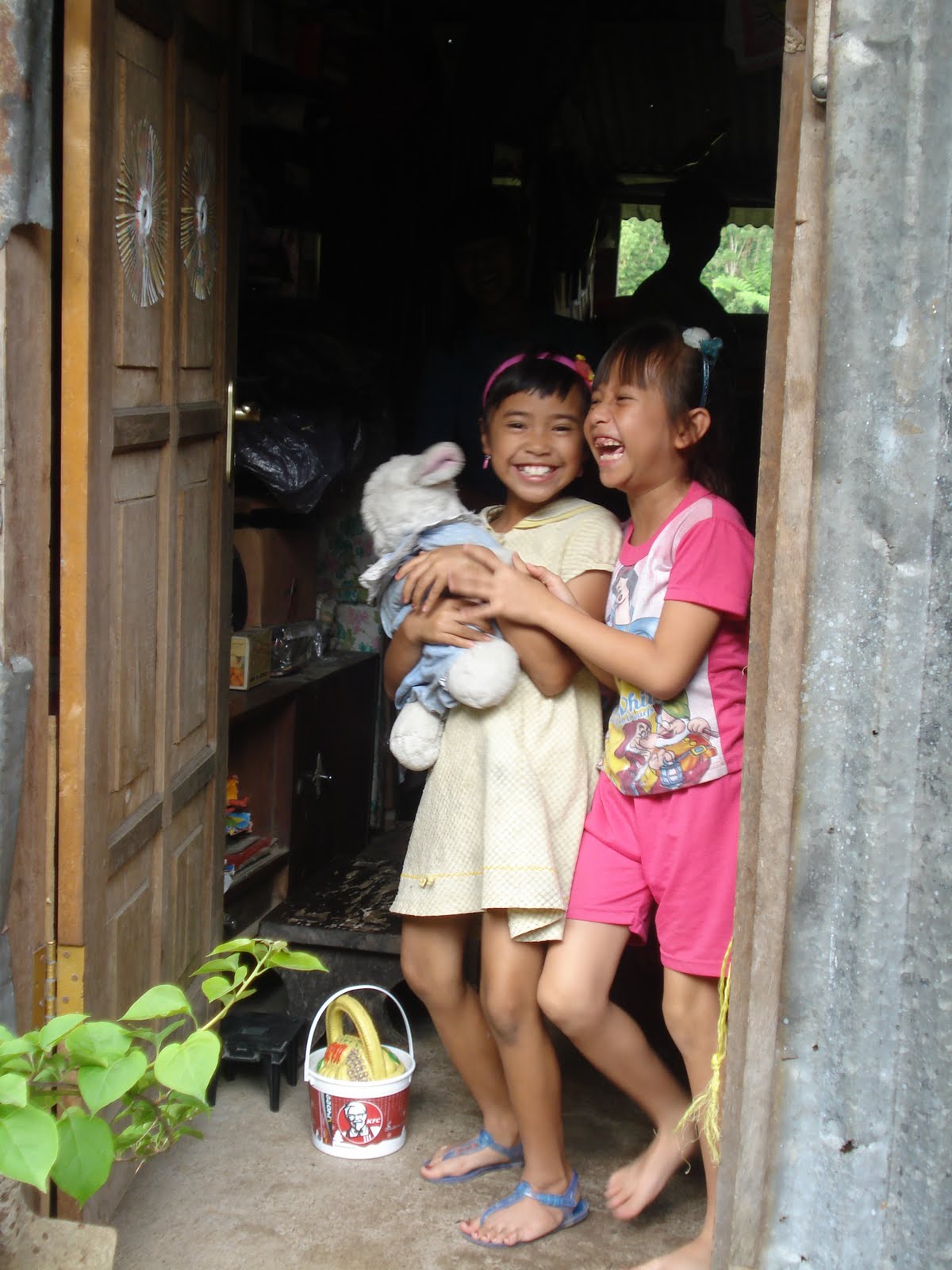
Eén van de manieren om stress en verandering te overleven is humour. Gelukkig kunnen kinderen vaak heel goed lachen. Deze lachende kinderen ben ik in Indonsië tegengekomen op één van mijn reizen op deze aarbol.

Een tip voor gezinnen in een andere cultuur: zorg dat er momenten zijn dat jullie met elkaar lachen, plezier hebben, de grappige kant proberen in te zien van een situatie. Daar zit kracht in en die heb je zeker nodig met al die uitdagingen die je als gezin tegenkomt in het onbekende.